
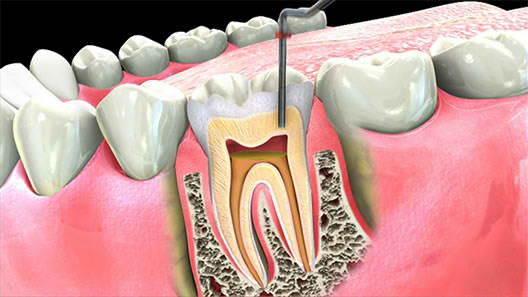
 Each tooth contains an internal component called the dental pulp. The dental pulp contains nerves, blood vessels, and provides the tooth with nutrients. This pulp chamber extends completely into the root(s) of each tooth. The front teeth typically have one canal, bicuspids have two canals, and the larger teeth in the back, molars, typically have three or more canals. However variations of this may occur, depending on the unique anatomy of each individual.
If the pulp becomes injured or infected, the nerve(s) may begin to die and often, without root canal treatment, the tooth dies as well. Endodontic therapy (a root canal) is designed to save such a damaged tooth. During the procedure, which is performed with local anesthesia in our Apopka office, a small access hole is drilled into the top of the tooth. The diseased pulp chamber is entered, reshaped with special files, and thoroughly cleaned and disinfected with an antibacterial medicament. In the process, the diseased portion of the tooth is completely removed, along with all of the nerves and blood vessels in the canal(s). The space is then filled with a plastic material and permanently sealed with a restoration such as a filling and/or crown.
Due to the heavy forces exerted by the jaw in the back of the mouth, bicuspids and molars typically always require a crown. Once the blood supply is removed from a tooth, the tooth itself becomes more brittle and fragile. In many instances, the front teeth may require nothing more than a filling. This is solely dependent on the amount of tooth structure remaining after root canal therapy is complete.
If you have any questions please do not hesitate to call our Apopka office at (407) 889-9682.